
12 October 2026
Anghiari: what to see. The village of the battle Leonardo was meant to paint
Discover the valley · guide 2 of 11
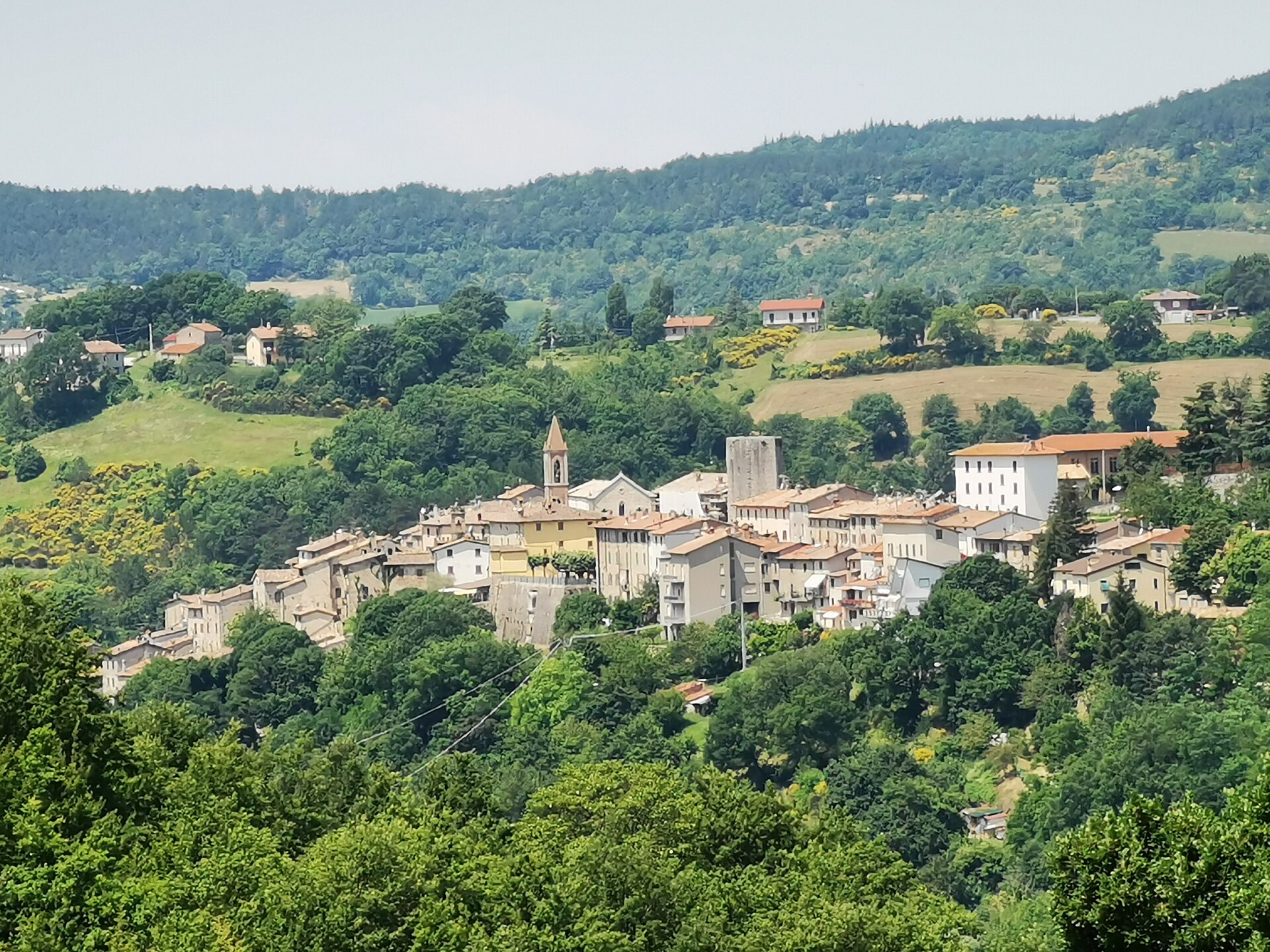
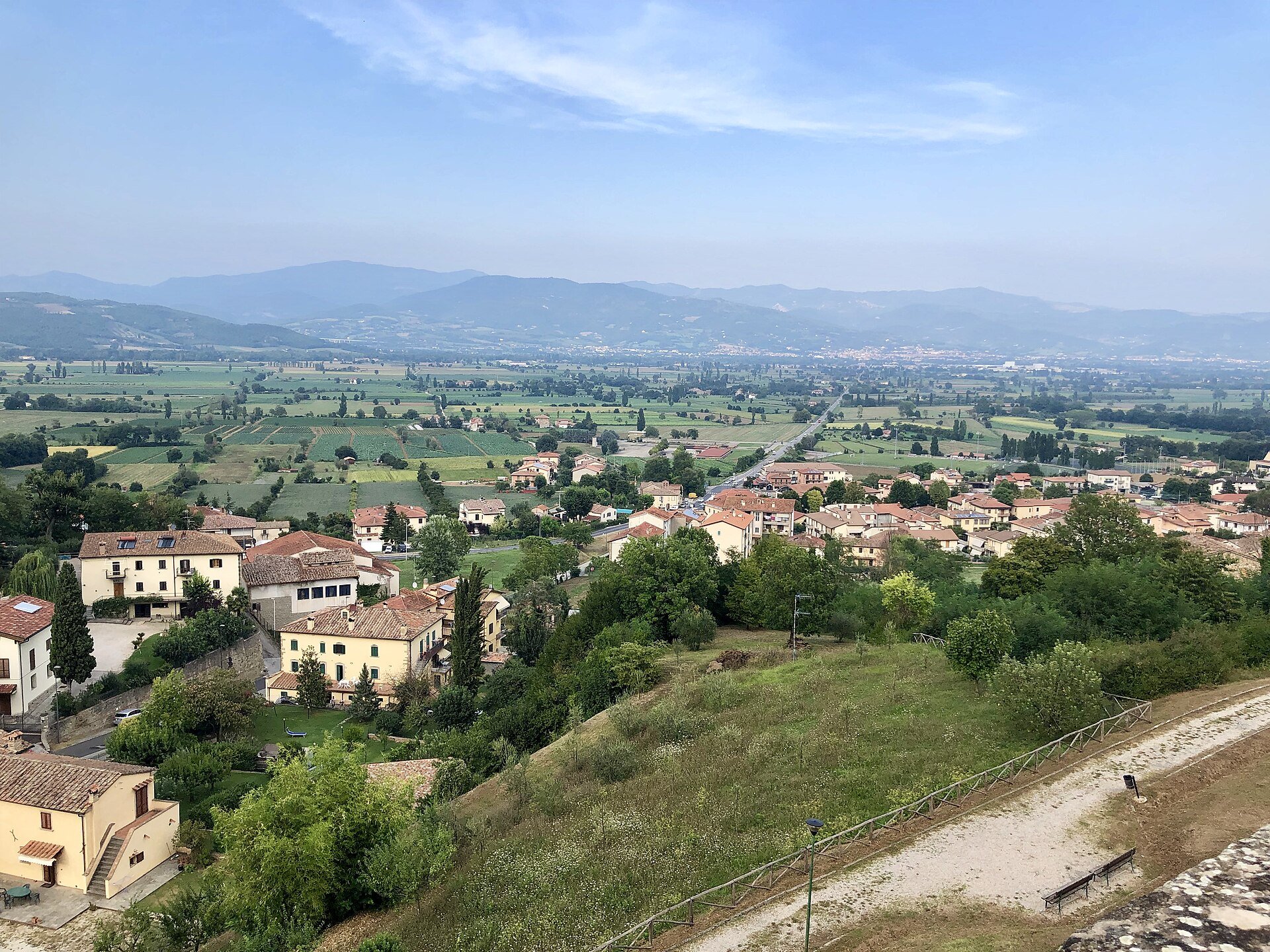
From the walls of Anghiari you look down onto a plain as flat as a table. There, on 29 June 1440, Milan and Florence fought the battle Leonardo was later commissioned to paint in Palazzo Vecchio, in Florence. The painting was never finished and has been lost. The plain, however, is still there, and the village above it is a tangle of stone lanes held tight within its walls, high over the Tiber Valley, awarded the Touring Club’s Orange Flag.
Here is what to see in Anghiari: the Museum of the Battle and of Anghiari, Palazzo Taglieschi with Jacopo della Quercia’s Madonna, the «ruga» and the squares, Palazzo Pretorio with its coats of arms and, just outside, the Camaldolese abbey.
The battlefield
Start with the landscape. From the village you can see the stretch of land where the battle was fought in 1440: Florence against Milan. At the beginning of the sixteenth century the Florentine Republic asked Leonardo to celebrate that victory on the walls of its palace; the work was never completed and today only drawings and copies remain. Coming here means seeing the place of a painting no one can look at any more.
The Museum of the Battle and of Anghiari
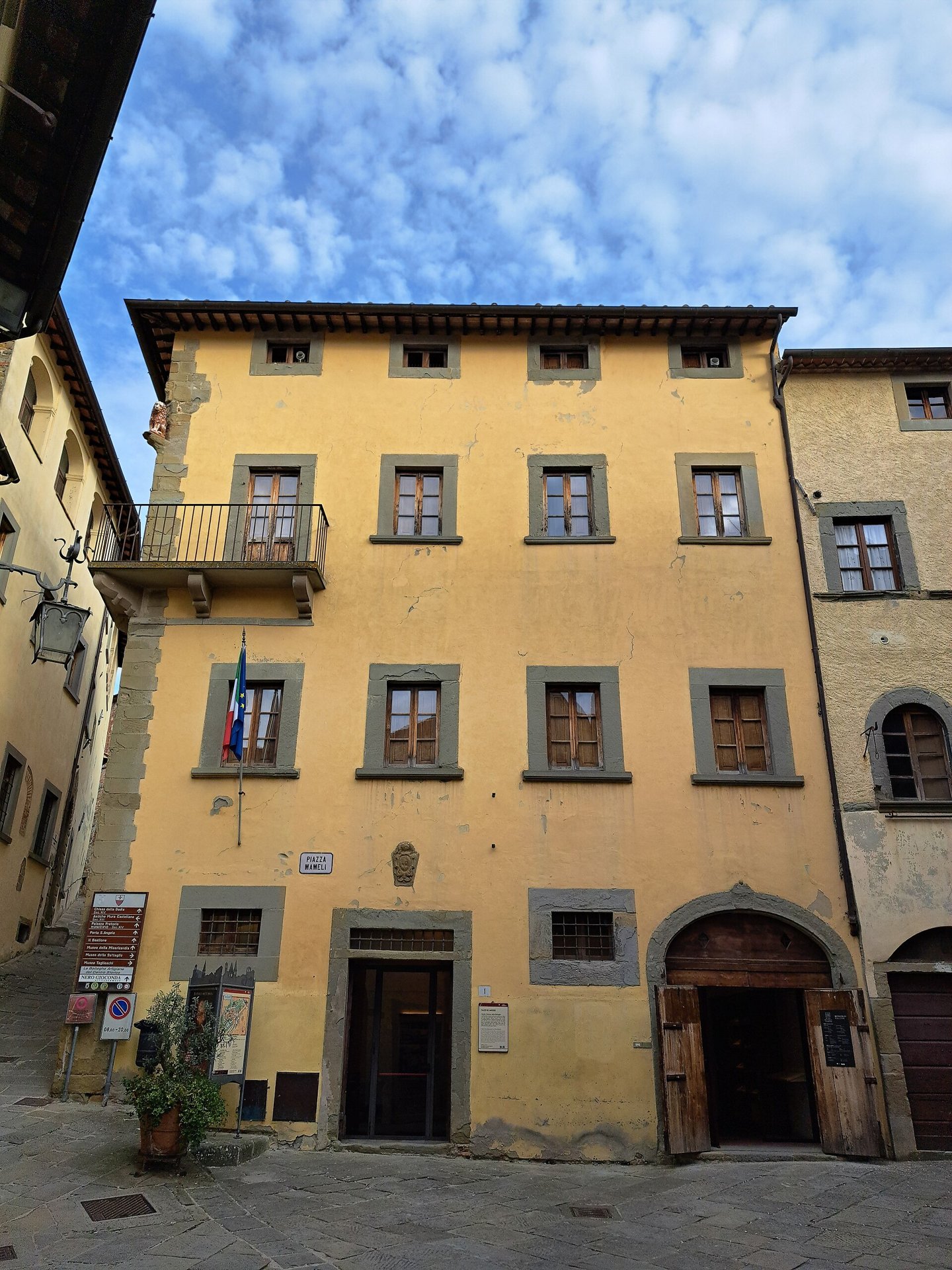
The museum occupies the sixteenth-century Palazzo del Marzocco and carries two names because it tells two stories under one roof: that of the village, from prehistory to the eighteenth century, and that of the day in 1440. The battle section compares the drawings, copies and reconstructions of Leonardo’s lost painting: the closest we can get to imagining it.
Palazzo Taglieschi and Jacopo della Quercia’s Madonna
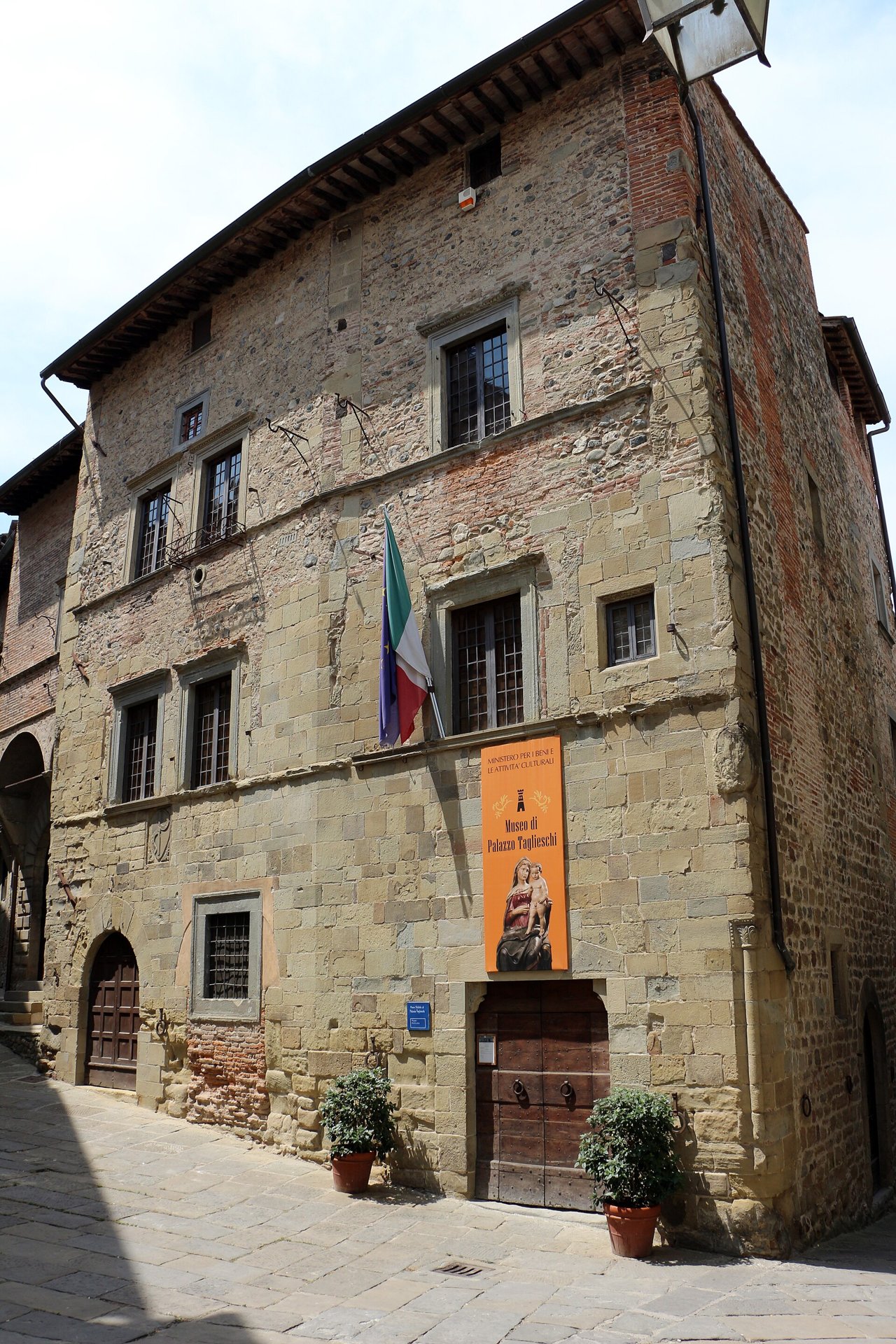
Opposite the museum stands Palazzo Taglieschi, built by the family of the same name around the middle of the fifteenth century by joining several medieval towers. Today it is a state museum devoted to the art of the Valtiberina. Its masterpiece is the Madonna carved in wood by Jacopo della Quercia; alongside it, works by Andrea della Robbia.
The ruga, the squares and Palazzo Pretorio
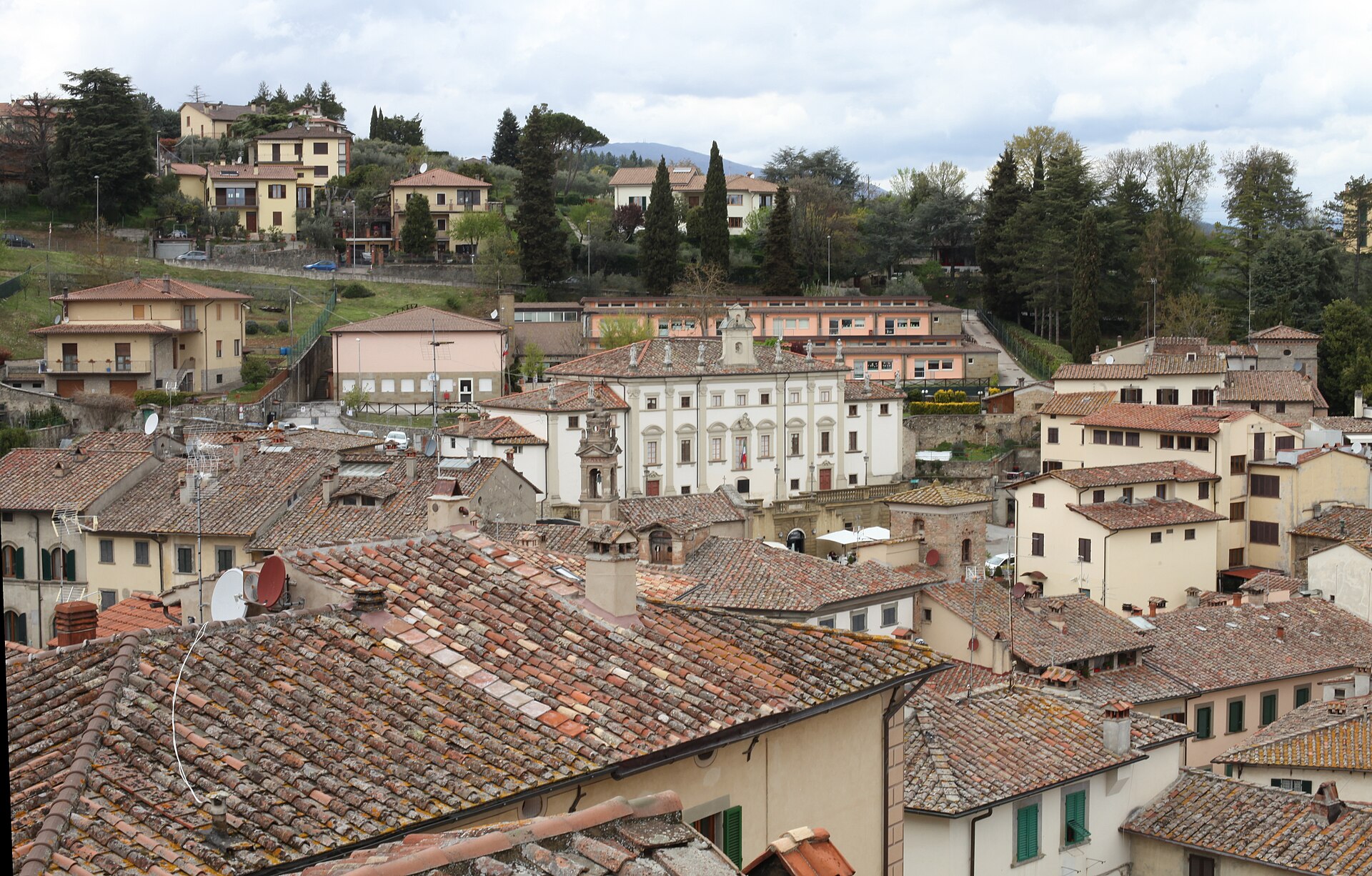
You cross the village along the «ruga», the long, steep street that cuts it in two and runs down towards Piazza Baldaccio, the village’s living room, where medieval and Renaissance buildings stand side by side. The fourteenth-century Palazzo Pretorio, now the town hall, bears on its façade the coats of arms of the podestà and vicars who governed Anghiari on behalf of Florence. Between one lane and the next, the climb costs you breath and repays you with views.
The Camaldolese abbey
Further back in time, the abbey of Anghiari dates from around the year 1000: some four centuries before the battle, when the Camaldolese monks were already here.
The Festival in Anghiari
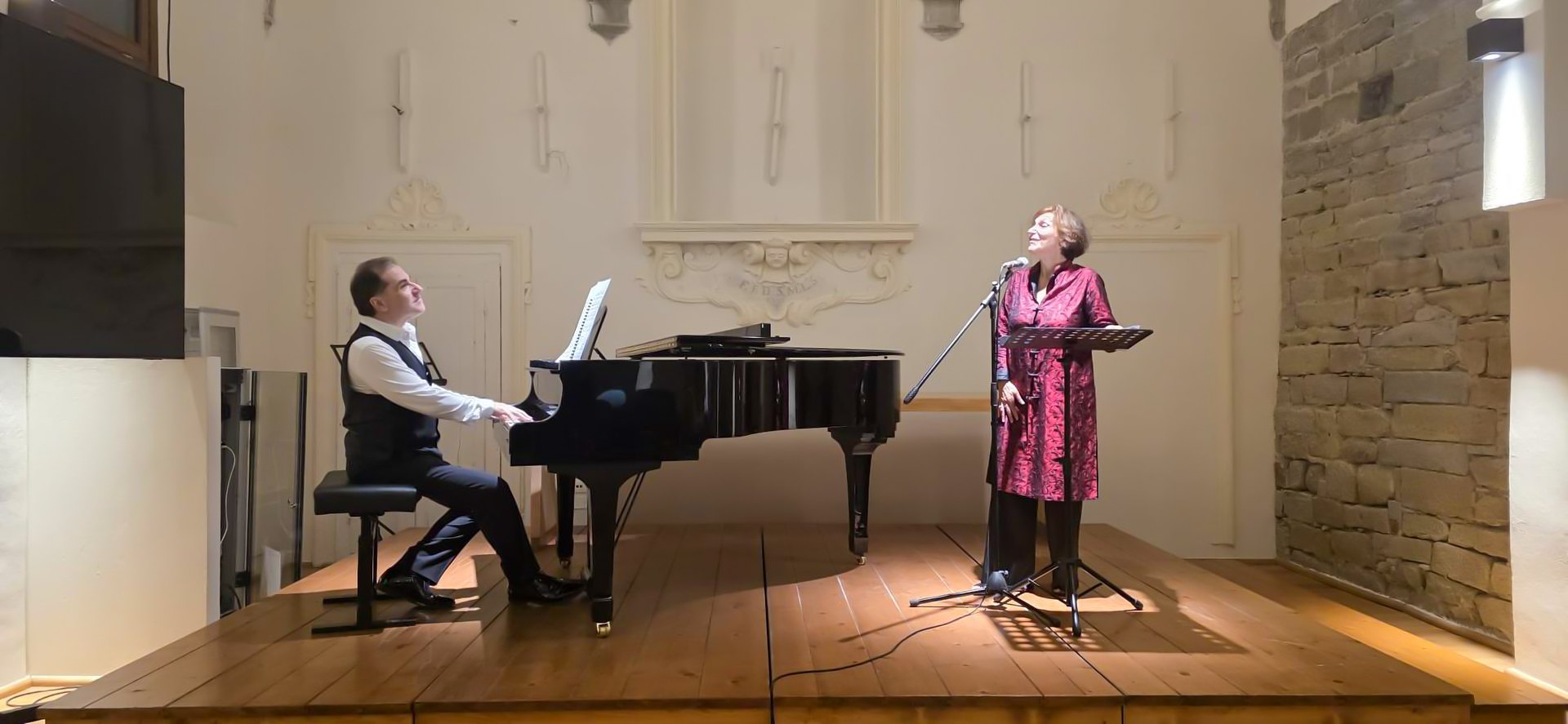
In Anghiari the Festival delle Nazioni plays at the Auditorium Mascagni, and above all brings stories told through music. In 2025 «Storia di un Gesù», with Guido Barbieri as narrator and soloists of the Orchestra Filarmonica Vittorio Calamani, on the fiftieth anniversary of Pasolini’s death; in 2026, for the 59th edition, Richard Strauss’s «Enoch Arden» on verses by Tennyson, with Caterina Casini as narrator and Marco Scolastra at the piano. A battle was meant to reach us as a painting; these stories came through a voice.
When to go and how to get there
Anghiari is in Tuscany, in the province of Arezzo, on the Tuscan side of the Tiber Valley; it is reached by car from Sansepolcro or Città di Castello. Half a day is enough for the two museums, the ruga and the squares; add the abbey and a walk along the walls and it becomes a full day. The village is steep: wear comfortable shoes. Museum opening hours and tickets change with the seasons and are on their official websites; events in the village, held throughout the year, are announced by the town council.
To reach the valley and plan your visit, see the Discover the valley page. The other town guides are in the Discover the valley section.
Support the Festival
Every summer the Festival delle Nazioni brings music to the villages of the valley, on both sides of the border between Umbria and Tuscany. You can help us come back next year by becoming a member: everything is on the Support the Festival page (in Italian).
Sources: Visit Tuscany; Touring Club Italiano; Finestre sull’Arte; Festival delle Nazioni concert calendar. Photos: Mongolo1984, Davide Mauro and TeKappa (CC BY-SA 4.0), Sailko (CC BY 3.0), Wikimedia Commons; Festival delle Nazioni.