
6 October 2026
Pietralunga: what to see. The fortress, the Pieve de’ Saddi and the dragon
Discover the valley · guide 1 of 11
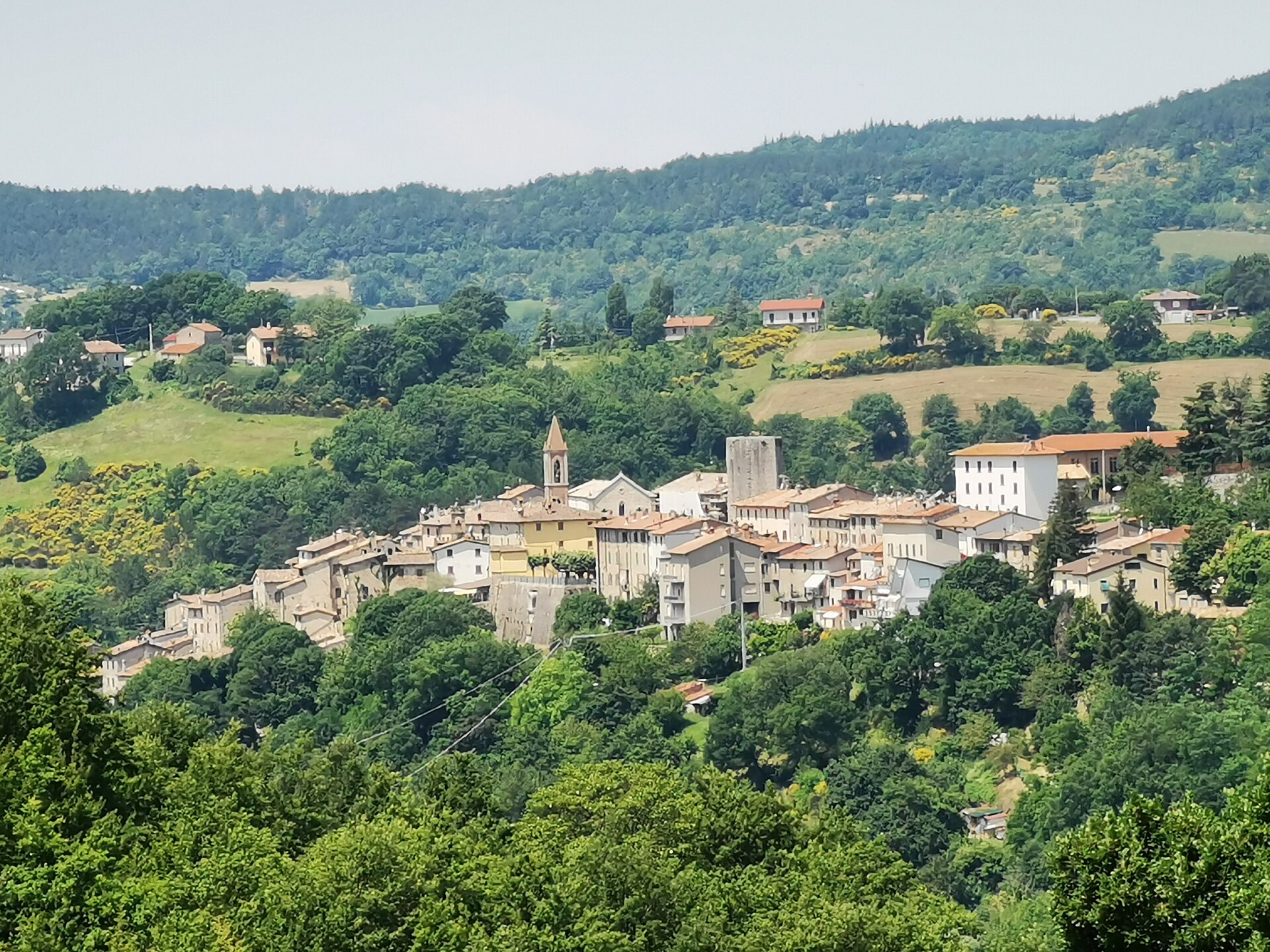
In a country church outside the village, a saint has been slaying a dragon for more than a thousand years. The scene is carved in stone, in an eighth-century relief, and to see it you come to Pietralunga: a walled village at the end of a ridge on the north-eastern side of the Tiber Valley, where the hills begin to turn into the Apennines. Around it, woods and green valleys; below it, the Carpinella valley.
Here is what to see in Pietralunga: the Lombard fortress, the Pieve de’ Saddi with its saint and dragon, the Pieve di Santa Maria, the lanes of the old village and, just outside, a sanctuary and an abbey in the hills.
From the ancient Umbrians to the Lombards
Pietralunga dates back to the ancient Umbrians, the people of the Iguvine Tablets. A prehistoric flute carved from a bone was even found in the area; it is now in the Archaeological Museum of Perugia. In Roman times there were villas, aqueducts and roads here: a branch road linked upper Umbria to the Via Flaminia. In the fourteenth century the village chose to submit to Città di Castello, and remained so until 1817, when it became an independent municipality again.
The Lombard fortress
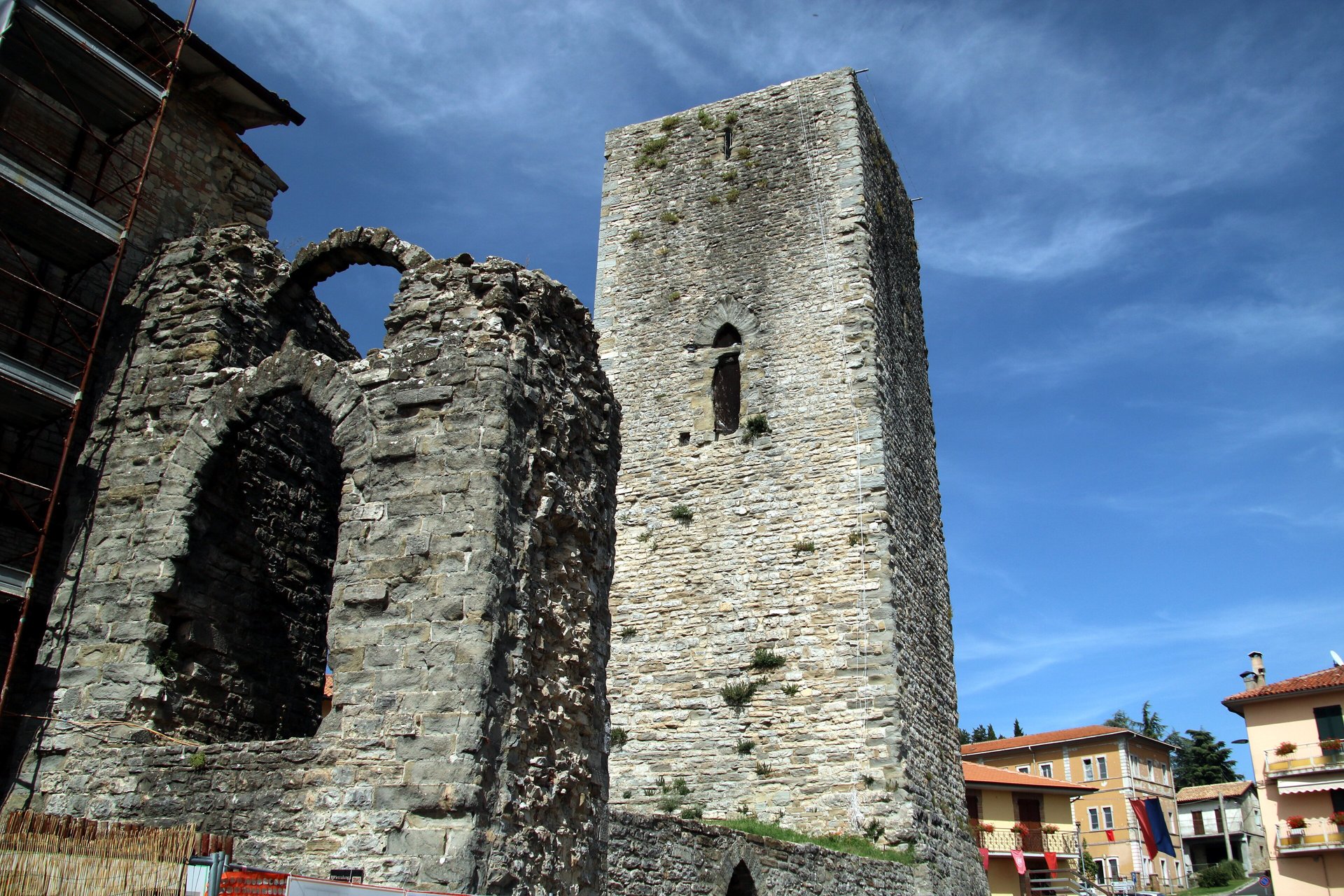
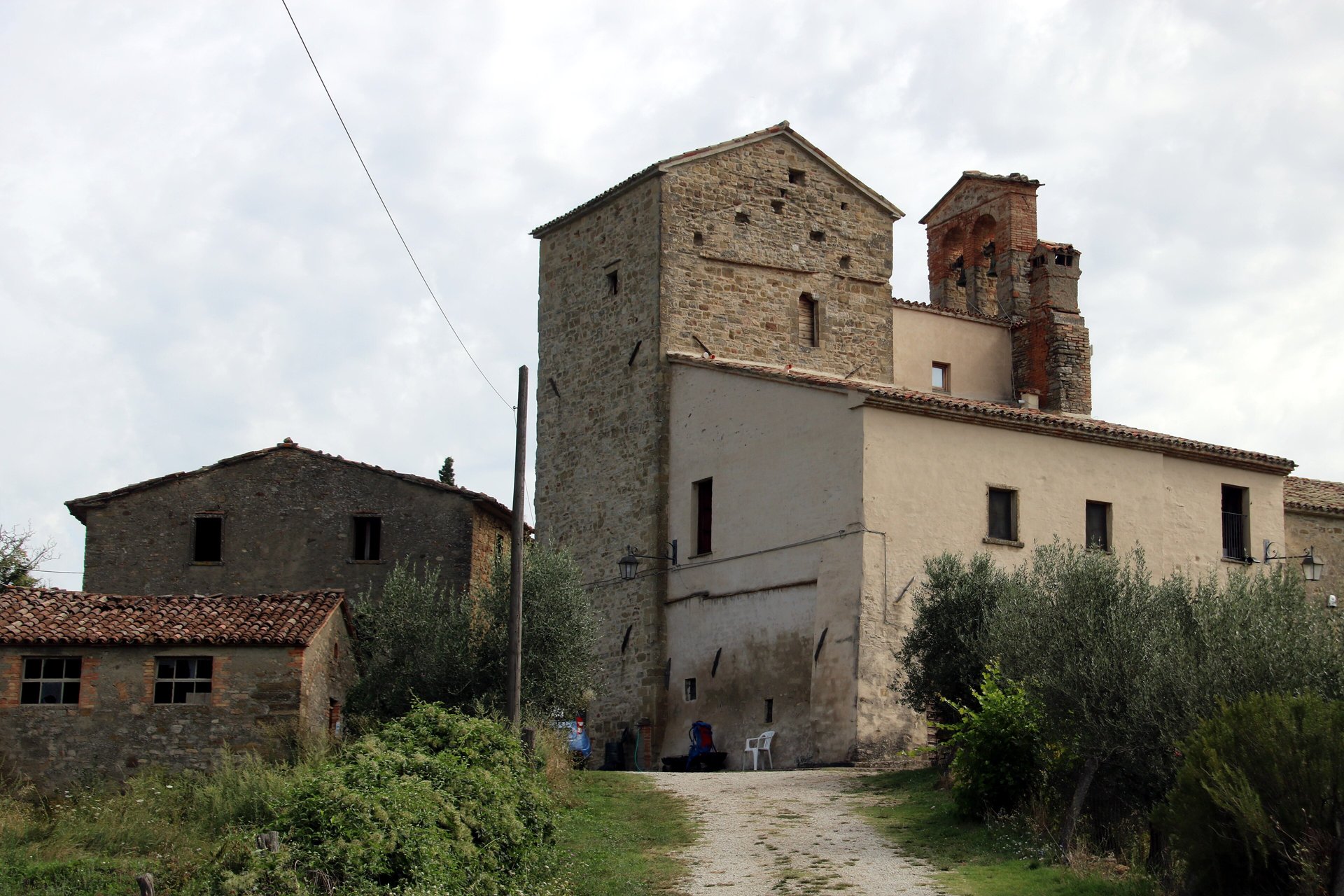
The walk begins in the heart of the village, at the fortress built by the Lombards around the eighth century. What remains is the gateway of the ancient castle.
The Pieve de’ Saddi: the saint and the dragon
For the dragon, you leave the village. The Pieve de’ Saddi is a typical early Christian basilica, built around the crypt that held the tomb of Saint Crescentian. Inside, the eighth-century relief shows the saint slaying the dragon: one of the oldest images in the valley.
The Pieve di Santa Maria
Back in the village, the Pieve di Santa Maria faces Piazza Fiorucci with a Romanesque portal dated 1279. Inside are the fresco of the Martyrdom of Saint Sebastian attributed to Raffaellino del Colle and a copy of Ottaviano Nelli’s polyptych, whose original is in the Galleria Nazionale dell’Umbria.
The lanes, the sanctuary and the abbey
The old centre is a medieval village enclosed by walls and crossed by «vigoli», as the narrow lanes are called here. About two kilometres to the south is the sanctuary of the Madonna dei Rimedi, the old church outside the walls; further away, on an isolated hill along the road to Reggio, stands the abbey of San Benedetto Vecchio.
The Festival in Pietralunga
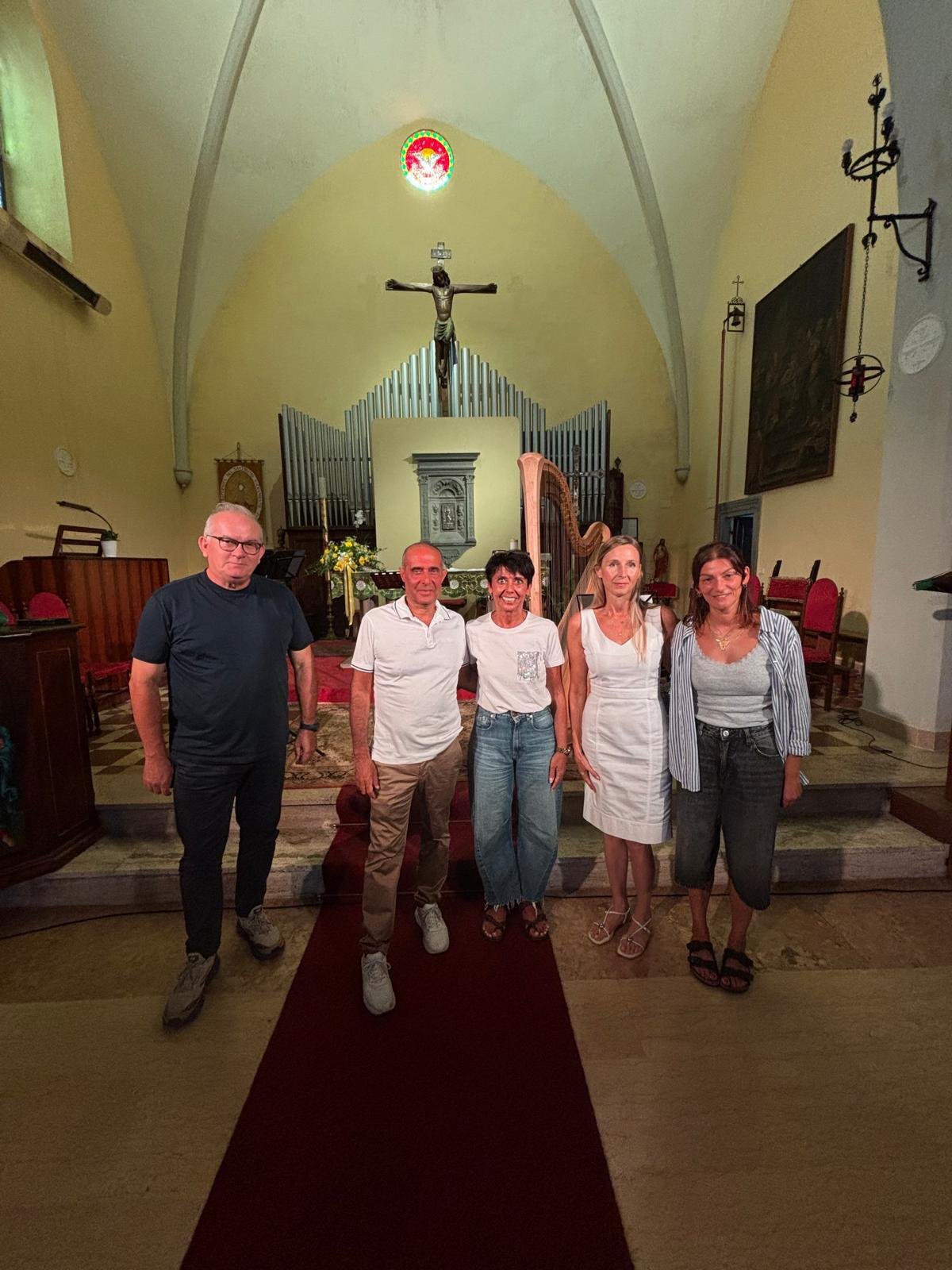
In recent years the Pieve di Santa Maria has become one of the Festival delle Nazioni’s venues. In 2025 Alessandro Marangoni played Rossini’s Péchés de vieillesse on the piano here, the other face of the composer; in 2026, for the 59th edition, Daniela Pini, Fulvio Fiorio and Davide Burani brought voice, flute and harp to «Ornamenti Europei», from Bach to Rossini.
When to go and how to get there
Pietralunga is reached by car from Città di Castello, heading north-east. It is also a stage of the Way of Saint Francis, the route from La Verna to Assisi, between Città di Castello and Gubbio. Half a day is enough for the village and the Pieve de’ Saddi; add the sanctuary and the abbey and it takes a full day. Every autumn, in October, the village holds its white truffle and potato fair, the Mostra Mercato del Tartufo Bianco e della Patata: the dates of each edition are announced by the town and its Pro Loco.
To reach the valley and plan your visit, see the Discover the valley page. The other town guides are in the Discover the valley section.
Support the Festival
Every summer the Festival delle Nazioni brings music to the villages of the valley, right into their most remote churches. You can help us come back next year by becoming a member: everything is on the Support the Festival page (in Italian).
Sources: Umbria Tourism; Festival delle Nazioni concert calendar. Photos: Sirleonidas and Mongolo1984 (CC BY-SA 4.0), Wikimedia Commons; Festival delle Nazioni.